
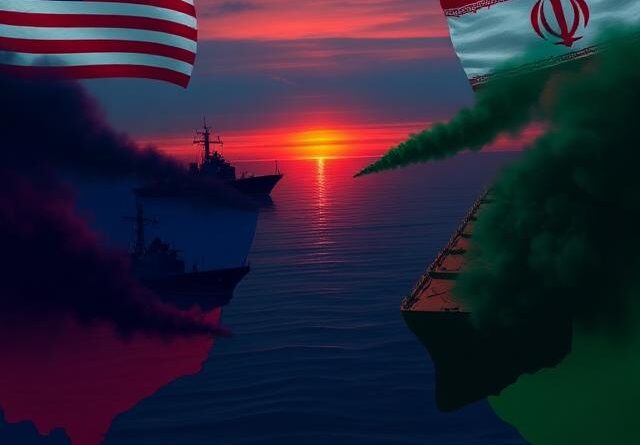
US-Iran Conflict: Latest Developments (July 2026 Update)
Key Takeaways
- The clash between the US-Iran is intensifying around the Strait of Hormuz, a passage that is used by approximately one-fifth of the world’s oil and gas.
- The April ceasefire agreement was extinguished by early July and the two have since been striking each other almost daily at military and infrastructure targets.
- Former Iranian Supreme Leader Ali Khamenei was killed and buried earlier this month and his son Mojtaba is now acting as the Supreme Leader.
- Oil prices have sharply fluctuated with the fighting, falling to about $71 per barrel during periods of calm and rising once again to $80 as strikes start, and shipping has also fallen to a trickle of pre-war levels as the fighting continues.
- Mediators such as Pakistan and Qatar have been trying to restart talks, but neither side is making much progress, and the formal ceasefire was recently declared expired by Washington while “talks about talks” go on.
How We Got Here
The ongoing US-iran conflict dates to the conflict over control of the Strait of Hormuz and Iran’s continued claims to some of the waterway, and its occasionally firing shots at commercial vessels. In turn, the US launched strikes on Iranian naval and port facilities and — more controversially — against sites related to its nuclear and energy programs. A first ceasefire, facilitated by Pakistan, was put into place on 8 April when Iran rejected a first 45 day ceasefire and instead proposed its own 10-point plan. Later in the month, Trump stretched the truce out indefinitely, though it was precarious as both sides claimed violations; by early July, the truce essentially was dead.
The Current Escalation
Hostilities flared once again in mid-July when the US-Iran struck each other’s infrastructure and military targets. In the latest escalation, Washington has acknowledged that it had smacked down an Iranian port surveillance tower allegedly connected to the Revolutionary Guard, while Iran has blamed other attacks on the US that Washington has not substantiated, illustrating how difficult it is to pinpoint what’s going on. As the US promised to continue discussions at Iran’s request, Trump formally called the ceasefire off. Mohammed Bagher Ghalibaf, Iran’s chief negotiator, threatened to resist “all-out” if the US resorts to “breaking” the wartime pact yet again. On top of the turmoil, long time Supreme Leader Ali Khamenei was buried in Tehran earlier this month, and his son Mojtaba Khamenei has just taken over as supreme leader, which makes Iran’s next moves even harder to predict, according to analysts.
The Economic Fallout
- The disruption can be seen in the numbers: One of the world’s most vital chokepoints for energy trade, the Strait of Hormuz is home to the 11th most busy port.
- The volume of shipping has slowed down drastically. Prior to the war about 110 ships passed through the Strait each day. In the height of the conflict it was reduced to just 12 ships in just 24 hours.
- Crude oil prices remain fluctuating, but have not reached their highest levels. Brent crude briefly rose above $100 per barrel during the crisis, dropped to about $71 during the ceasefire period in April – June, and is now edging toward $80 as strikes have restarted.
- U.S. gas prices continue to be high but haven’t hit their peak. While the administration admits the war is a direct contributor to price fluctuations, pump prices are down about 60 cents a gallon from the conflict’s peak, the White House says.
- The Gulf is once again home to GPS spoofing and vessel tracking jamming, adding to the challenges of commercial shipping and military surveillance in the area.
International Response
Pakistan and Qatar have co-led the diplomatic drive, holding or brokering talks between the two countries, with an upcoming meeting in Islamabad between Pakistan and the United States. In New York, U.S. officials told the U.N. Security Council on Wednesday that Washington still favours a diplomatic solution to the issue of shipping violations in the Strait of Hormuz, but it is “ready to hold Iran to account. A group of 22 countries, including Australia, Britain, France, Germany, Japan, South Korea, Bahrain and the UAE, condemned Iran’s attacks on shipping, separately, and also offered to facilitate safe passage. However, the US was not one of the signatories and this demonstrates that even allies are moving somewhat their own path.
What This Means going Forward
The next stage will most probably be determined by three things: Whether or not the Strait is reopened to normal traffic. Past periods of peace in fighting have paralleled gradual reopening of shipping lanes and any subsequent escalation has led to a gradual closing down of the lanes. In the new government in Iran, the internal stability of the regime. The prospects of a leadership change in Tehran during wartime are a genuine wildcard as it may drive the city towards consolidation at home or towards hard lines to project strength. Whether or not mediators can make “talks about talks” into a real framework. Strike and stop work negotiations have come in a round-robin fashion a few times without a lasting settlement. With both the situation changing so fast and the various claims still up for debate regarding individual strikes, don’t expect a sense of stability from one week to the next
A Note on Sourcing
This is a rapidly changing conflict and specifics such as numbers of casualties, who is striking whom, which round of talks has reached what stage, and so on, are open to different interpretations, even among outlets with official credentials. We offer you accurate, timely, and trusted news coverage at Nexus of Nation through wire and broadcast reporting as well as government’s statements made on the day of the event. The reader is advised to check the specific attribution of these claims, which are often disputed and subject to change as more information is made available.
