
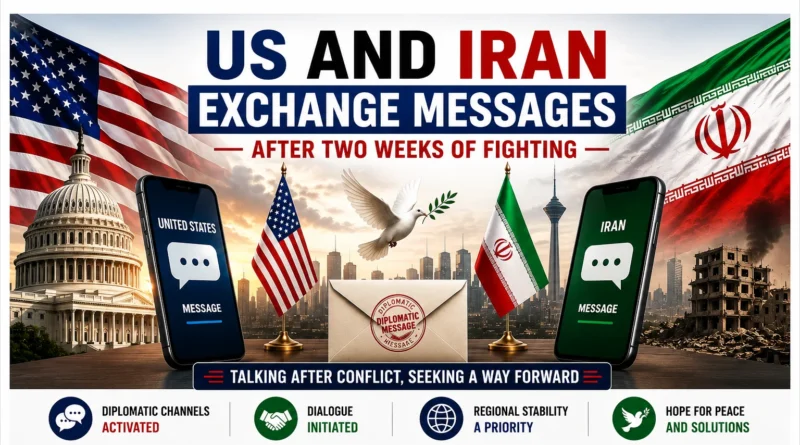
US and Iran Exchange Messages After Two Weeks of Fighting
Key Takeaways
- US and Iran exchange messages through mediators including Pakistan, Iran’s Foreign Ministry has confirmed, after nearly two weeks of intense fighting
- Strikes by the two nations appear to have paused since this past weekend, after nightly American bombings and Iranian attacks on US allies
- US Ambassador to the UN Mike Waltz noted President Trump is giving negotiations “some space” to develop, while simultaneously stating that the US military is “locked and loaded”
- The core disagreement over control over and management of the Strait of Hormuz appears to be the issue most resistant to resolution, with language in the original interim agreement deliberately vague on the subject
- Pakistan’s Foreign Ministry has pushed back against reports that it has pulled out of its role as a mediator, saying that the US and Iran will ultimately have to return to the negotiating table
A Pause After Two Weeks of Fighting
US and Iran exchange messages after two weeks of sharp escalation – nightly American strikes and Iranian retaliation on US allies. That pattern appears to have paused since this past weekend. Mike Waltz, US ambassador to the UN, said on NBC’s “Meet the Press” that Trump is giving negotiations “some space,” with talks occurring “at every level.” He also stressed that the pause in hostilities does not mean a cessation of hostilities, noting Trump’s emphasis that the US military is “locked and loaded,” with the President “keeping all options on the table.”
How the Messages Are Being Exchanged
Iranian Foreign Ministry spokesperson Esmaeil Baghaei noted this week that the United States is engaging in communications with Iran through mediators, including Pakistan and Qatar, as the countries look to resume dialogue. Note that this is an exchange of messages through third parties, not an immediate resumption of direct communications between the warring states. Under the memorandum of understanding (MOU) between the US and Iran that went into effect on June 18, the two nations agreed to hold talks in an attempt to negotiate a final agreement over the following 60 days. That goal now appears to be at risk given the renewed clashes between the two countries over the last two weeks.
The Core Sticking Point: The Strait of Hormuz
According to people familiar with the negotiations – as the US and Iran exchange messages through mediators – the disagreement over management of the Strait of Hormuz, the energy-waterway lifeline, appears to be the main sticking point, one that sees Iran possessing its main leverage over the US. The language in the original interim agreement appears to be deliberately vague on the subject, leaving the differences between the two nations unaddressed.
Conflicting Accounts From Both Sides
The US and Iran have a long history of providing sharply contrasting accounts of their respective actions and intentions, and the current diplomatic tug-of-war is no different. Trump himself noted on his Truth Social account that Iran had asked the US to continue “talks,” noting that the Islamic Republic “has asked us to continue ‘talks.’ We have agreed to do so, but the United States has stated to them, in no uncertain terms, that the Cease Fire is OVER!” hours later, Iran’s foreign ministry spokesperson denied that Iran had sought to continue negotiations, noting only that they agreed to a visit from the Qatari delegation trying to reach an agreement.
Pakistan’s Continued Role
Pakistan has acted as a mediator during the crisis as the US and Iran exchange messages, and its Foreign Ministry has pushed back this month against reports that it has pulled out of its role. “Let me dispel the impression that Pakistan has done hands up, and this is not the case,” ministry spokesperson Tahir Andrabi noted during a press briefing, saying that the US and Iran “will have to come to the negotiating table to settle all outstanding issues.” The statement follows Pakistan’s role in facilitating the ceasefire agreement between the US and Iran last month, which ended up being short lived.
The Military Backdrop
Even as diplomatic channels remain open, military preparations add context to the discussions. Waltz noted that “a lot of stockpiles are depleted” on the US side, but that they have “everything that it needs” should another confrontation arise. In one war council earlier this week, Trump administration officials even briefly discussed an expanded confrontation with Iran, with Joint Chiefs Chairman Gen. Dan Caine reportedly voicing concerns within the Pentagon about the munitions requirements for such an operation. On the other side, Tehran appears to be capitalising on the pause in fighting, with one Iranian official claiming the current circumstances were a “victory” for Iran over the US due to the “experiencing strategic decision-making”.
What Comes Next
- US and Iran exchange messages through Pakistani and Qatari mediators, with strikes apparently paused for now, but the key question is whether this diplomatic opening can be turned into a durable agreement before the fighting breaks out once again
- Much will depend on the ability of both nations to agree on the terms of reference concerning the Strait of Hormuz
- Another critical factor is whether the original 60-day time-frame between the signatories of the June MOU can still be met
- A third crucial question is whether the pause in fighting will last long enough for the two nations to actually return to the negotiating table, rather than continuing to send messages through third-party nations
A Note on Sourcing
This is a rapidly developing situation with reports coming in from multiple sources. This piece aggregates information from CNN, the Associated Press (via the Washington Post and WSLS), Al Jazeera, and GlobalSecurity.org, as of July 27, 2026. Information on this topic is highly sensitive and may change drastically from hour to hour as the situation between the US and Iran continues to evolve. To stay up to date on all the latest developments, check back at Nexus of Nation for more war-related news.
