Trump Prepares New Global Tariffs Amid Trade Tensions (2026)
KEY TAKEAWAYS
- Trump prepares new global tariffs on dozens of economies by July 24 as his temporary 10% global tariffs expire on the same day
- his revised tariffs come after the Supreme Court ruled the initial duties unlawful
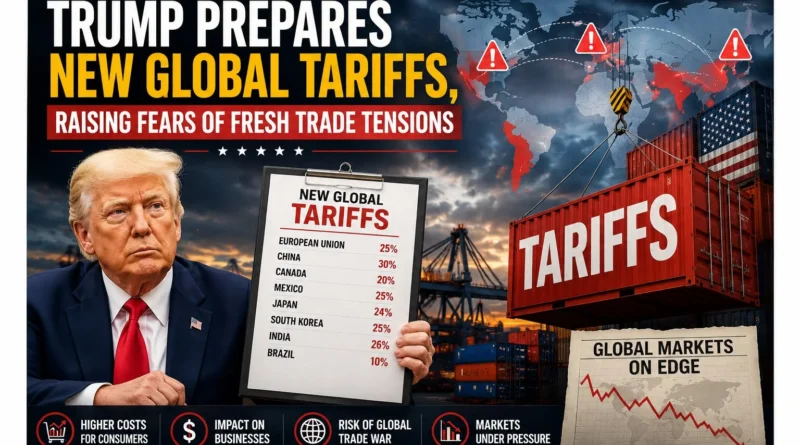
- newly proposed tariffs range from 10-12.5% for roughly 60 countries, according to Section 301, after imposing 25% duties on Brazil beginning July 22 as a trial run
- Tariffs of 50% threaten Canada, which the Prime Minister says flagrantly violated the USMCA, but he added that “all options are on the table”
WHY THIS IS HAPPENING NOW
The administration’s latest tariffs are the result of a court battle over whether it had the legal authority to enact them in the first place. After a Supreme Court ruling last month, $50 billion in refunds were issued in just June alone for the so-called “Liberation Day” tariffs in April. Within hours of the ruling, the administration announced new 10% tariffs on all goods covered by Section 122 of the Trade Act, which normally allows levies of up to 15% for 150 days to remedy trade practices. That provision expired on July 24, 2026, unless renewed by Congress, and the administration needed new legal justification to maintain its tariffs.
WHAT’S NEXT: THE NEW TARIFF PLAN
The Trump administration is poised to impose new Section 301 and 232 tariffs, including 10-12.5 percent duties on 60 nations over “forced labour” and “global overcapacity” probes on 75 percent of US imports. Brazil, which faces 25 percent tariffs with exemptions for oil, beef, coffee and orange juice, and Canada, which would be subject to 50 percent tariffs under a Section 301 measure, the Canadian prime minister argued, violated the agreement. “Talks will accelerate,” said Canadian Prime Minister Justin Trudeau, but “all options are on the table.”
WHO MAKES THE CALL ON TARIFFS
President Trump continues to advocate tariffs as a means to both raise revenues and protect American industry, a position he has maintained since his first term when he imposed tariffs on steel and aluminium. U.S. Trade Representative Jamieson Greer is tasked with continuing the Trump tariffs policy using whatever legal authority is available, which has so far included Section 122, 232 and 301. The administration has refused to renew the U.S.-Mexico-Canada Agreement (USMCA) and is instead reviewing its trade practices on an annual basis, but analysts say those tariffs are unlikely to change significantly.
HOW THE WORLD IS REACTING TO TRUMP’S TARIFFS
From diplomatic sparring to trade lawsuits, allies and partners are pushing back as Trump prepares new global tariffs. The Canadian government has accused the U.S. of violating the USMCA, but Brazil’s criticism of Trump tariffs has crossed into domestic politics. In general, trade experts note that the administration’s shift from emergency powers to Section 301, 122, and 232 will make its new tariffs more durable legal protections for American industries, even as it sparks renewed tensions with allies and partners.
HOW TARIFFS ARE IMPACTING THE MARKET AND THE ECONOMY
Ever-changing tariffs have made it difficult for firms to plan their budgets or long-term investments as Trump prepares new global tariffs. The administration’s abrupt about-face on tariffs – from imposing them to getting them overturned by the Supreme Court and then reimposing them under new authorities – has already had negative consequences for the economy. Refunds issued in just June totalled nearly $50 billion, which has hurt businesses attempting to predict their expenses. Administration officials believe it will take years for firms to adjust to the constant fluctuations in Trump tariffs before making any major investment decisions, while some critics say the tariffs are not achieving their intended economic effects.
HISTORY OF THE TARIFF FIGHT
The administration’s latest round of tariffs go back to “Liberation Day” in April 25, when Trump announced individualised tariffs on nearly every country in the world at once, sending shock waves through financial markets before they were paused within days. The philosophy behind Trump tariffs dates back to his first term, when he imposed steel and aluminium tariffs, which the Biden administration kept in place, and Trump re-established them when he returned to office. The steel tariffs of 25% and aluminium tariffs of 10% were imposed under Section 232, and were renewed by President Biden in April 2022.
WHAT’S NEXT FOR THE TARIFF FIGHT
The Court of International Trade last month ruled that the Section 122 tariffs were illegal, but the case is not over yet. The administration continues to impose the tariffs even as Congress considers a request to extend the expiration date of the tariffs. In the meantime, the administration is relying on Section 301 and 232 investigations to continue the tariffs. Analysts are waiting for the administration’s response to the Court of International Trade’s latest attempt to stop the tariffs, a move that critics say is part of the Trump tariffs “game.” The administration’s final decision on tariffs due no later than Friday is awaited with great interest, as is the possibility of another court challenge to the measures.
NOTE ON SOURCES
Tariff policy is being changed at a rapid pace, as Trump is preparing his new global tariffs, which will impact many trade partners in different regions. The information in this article is up-to-date as of July 21, 2026, which was retrieved from Bloomberg, Reuters, CNBC, Council on Foreign Relations, Atlantic Council Trump Tariff Tracker, and Agri-Pulse. In addition, please note that the situation may change rapidly, so you should bookmark this page for future reference. If you are interested in learning more about tariffs and international relations, feel free to visit the Nexus of Nation.
