
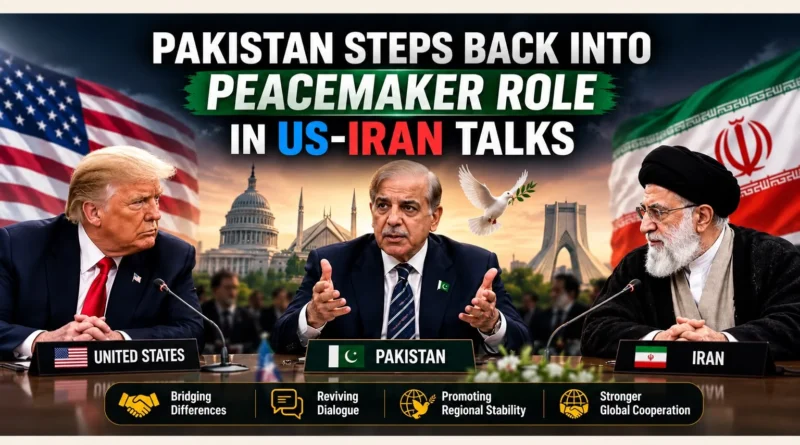
Pakistan Steps Back Into Peacemaker Role in US-Iran Talks
Key Takeaways
- Peacemaker role revived as Pakistan and Qatar seek to reengage the US and Iran in diplomatic talks after the June ceasefire agreement unravelled and fresh fighting broke out in mid-July
- Pakistan’s Foreign Ministry has called for all parties to exercise restraint and stated that they should adhere to the commitments made in the Islamabad Memorandum of Understanding
- Pakistan has served as a mediator for the second time this year, following the successful culmination of the April ceasefire deal and the historic talks between the US and Iran in Islamabad – the first such meetings since the Iranian revolution in 1979
- The diplomatic mission follows on from a 14 point Memorandum of Understanding signed by the US and Iran on 17 th June which provided for a 60 day period for consultation on issues concerning the Strait of Hormuz, Iran’s nuclear and missile programmes, and sanctions
- Israel has not participated directly in Pakistan mediated talks and some Israeli officials have challenged the agreement
Why talks broke down
Pakistan’s latest diplomatic initiative is its most significant endeavor to mend relations between the U.S. and Iran since the failed agreement in early July. The deal was struck between the two global powers in mid-June with Swiss mediation and Pakistan, Qatar’s support. Pakistan’s foreign ministry has called upon all warring parties to return to negotiations to establish stability and peace in the region, referring to Islamabad’s agreement as a model for peace and enhancing Pakistan’s peacemaker role between the warring nations.
How Pakistan became a preferred broker
Pakistan was able to become a mediator because of the groundwork over the past few months, such as the meeting between American and Iranian officials in Islamabad in April. This meeting produced a two-week ceasefire, which Trump later extended indefinitely and formed the basis for the agreement in June. Analysts believe that after President Trump accused Pakistan of “lying and deceitfulness” and promoting terrorism, its new peacemaker role is particularly ironic – a role in which it has since been engaged, including by facilitating the latest meeting between the United States and Iran, during which Munir was able to visit the White House.
The bigger picture
In addition to Pakistan, Qatar acted as an intermediary in facilitating indirect Doha talks and tripartite meetings between American and Iranian diplomats, while Oman facilitated the Islamabad agreement. Gulf states have been on the receiving end of both Iranian and American drone and missile strikes. Israel was not involved in Pakistan’s peacemaker role in the conflict, yet it participated in the American drone strikes on Iran after hostilities resumed in late February. Netanyahu stated that Trump proposed four concepts for a final agreement, including Iran’s removal of enriched material and restrictions on its missile programs, which Israeli Security Minister Itamar Ben Gvir rejected, saying, “Trump’s agreement does not obligate us.”
What the US and Iran are talking about
The 14-point Memorandum of Understanding to be signed by the US and Iran on June 17 provides for sixty days of consultation on three issues of utmost importance to both nations — freedom of navigation in the Strait of Hormuz, Iran’s nuclear and missile programs, and sanctions on Iran. It is these issues that are at the center of the ongoing negotiations in Pakistan, which see Pakistan as peacemaker role made even more difficult by renewed tensions after a ceasefire agreement collapsed.
Regional and global reactions
The UK government welcomed the talks in Islamabad in April and the agreement in June, and has called upon European allies to facilitate the rapid implementation of the Memorandum of Understanding, as part of the wider support for Pakistan’s peacemaker role. Gulf states have been direct victims of the renewed fighting, with heightened security across the region as a result of attacks on their territory. Within Israel the reaction has been mixed, with Prime Minister Netanyahu broadly supportive of the ceasefire agreement and its potential to contribute to regional stability, while other officials in his government and in the opposition challenged the agreement and its implications for Israeli security.
The outlook
With Pakistan and Qatar seeking to renew formal diplomatic consultations, the next phase will see whether the US and Iran are prepared to make sufficient concessions to revive the agreement which saw the violence subside. Pakistan’s call for restraint suggests that Islamabad is concerned that further attacks will undermine the prospects for a diplomatic solution, rather than contribute to a rapid resolution. It remains to be seen whether the 60 day time frame for consultations as per the 17 th June agreement will be respected, whether Israel’s objections will derail any renewed negotiations and whether Gulf security will permit renewed dialogue.
A note on sourcing
This is a rapidly evolving and volatile situation, with more information being reported every second – this article will be updated as new information becomes available, so check back to Nexus of Nation for more. Sources for this article include CNN, UK House of Commons Library, Al Jazeera Centre for Studies, Gulf News, and Wikipedia (Ceasefire and Islamabad Talks), which report on the news story using primary sources, as of July 21, 2026.
